Teaching Idea: “Build-a-brain” and the role of the emotions in consciousness

ex-machina

A still from Ex Machina. Image found here.

As part of my Comp II class, I assign groups of readings on various kinds of technologies and their potential impact on traditional notions of what it means to be human–in terms of both the self and our varied and various relationships with other people.  One set of those readings is on Artificial Intelligence: whether strong AI (which is to say, a genuinely thinking, understanding machine intelligence) is even possible; whether it’s a good idea to pursue this line of research; what the building of robots to serve as companions for humans implies for how we value (or not) interactions with others; the already-occurring displacement of workers by robots and machines performing tasks once done by people, and what to do about that displacement; etc.  I also assign them this short video in which Rosalind Picard of MIT provides what amounts to a short introduction on the need for and value of creating the capacity for emotional intelligence in robots that will be interacting with humans.  Picard is very precise here: she says that “emotional intelligence” is not the same as “emotion” and that we cannot yet build a machine with self-generated emotions.  She does, though, sort of wonder aloud what such a machine might look like, which is one of the ideas dramatized (to, I think, substantive and powerful effect) in this spring’s Ex Machina.  I had also been showing WALL-E as a way of showing a version of what emotional intelligence might look like in robots (as well as seeing a dramatization of a possible set of consequences of a post-human society for us as individuals and as communities); beginning this fall, though, I’ll be giving her a try: the fact that we never see Samantha in the film, but only Theodore’s responses to, um, her, gives us more to chew on, I think, regarding this issue of the distinction between emotional intelligence and emotion.  Without giving too much of the plot of Ex Machina away, that film raises that same issue, but seeing Ava and Caleb physically interacting with each other complicates matters considerably–for me, anyway.

That’s a lot of context just to be getting to the part in this post where I say, A couple of those readings have gotten a bit long in the tooth and/or are too obscure for what I want my goals to be, so when I ran across Michael Graziano’s thought-experiment/essay “Build-a-brain” a couple of days ago, I was glad to see that it can serve as a short, clear, and fairly sophisticated introduction to how we might achieve consciousness in a robot.  I think it might work equally well, by the way, as a way of helping students think critically–in this instance, to say, “Okay–I see what Graziano’s getting at . . . but is anything left out of his discussion of consciousness? And, for that matter, even though Graziano says that consciousness is a real thing and not illusory, does he really believe that?”

More below the fold.

Continue reading

Teaching Idea: “The ‘John Henry’ Variations”

John_Henry statue, Talcott, Summers County, West Virginia

Statue of John Henry, Talcott, Summers County, West Virginia. This is one of two sites (the other is in Alabama) that lays claim to providing the historical foundation for the story of the competition between John Henry and the steam-driven machine. Via Wikipedia.

Actually, this isn’t so much a Teaching idea as it is a nudge to me to do some archival stuff in the future in support of a Teaching Idea.

For a few years now, I’ve had the idea of using the multitudinous pre-WWII versions of “John Henry” as a way of getting adventurous students to think about and speculate on the subjects of American legendary figures, the mechanization of labor, differences and similarities between white and black attitudes about labor, and–heck, why not?–even thinking about music itself in an age before music-making and -marketing had become a national industry.  Well, you can probably guess, just from that little description, that none of my students has yet taken this up as a research project.  Some of that’s on me and how the prompt is written: it’s just too busy.  But some of it is surely due to the scattered nature of the materials themselves, not to mention the rather ephemeral nature of the Web itself: as a source for my students, I had been relying on one blog’s round-up of around 100 versions of “John Henry” or songs that in some way addressed that tradition . . . and then that blog just went away.

So, I changed the prompt to refer students to YouTube, just telling them to go trawling around in there for different performances, but that breaks one of my rules for assignment design: Don’t ask students to do anything you yourself wouldn’t want to do.  I must have subconsciously given up on the idea because I hadn’t felt especially motivated to do anything to improve it.  But this morning, I read this long article by Ann Powers at npr.org on the current state of the archiving of music on the Internet, and a voice inside my head said, “Hey!  Why don’t YOU build a ‘John Henry’ archive?”

So.  It won’t be this summer because of book-project stuff, but this fall or next spring that’s what I’ll be doing.  It’ll have some links to historical stuff, but its main focus will be on the songs themselves, along with background information, wherever available, about the performers.  I’m persuaded that the number and variety of this/these song(s) can tell the thoughtful listener a great deal about us as a nation, or us as we existed around a century ago; maybe, with the existence of one centralized place for recordings and some information, I can encourage my students (and whoever else might happen upon it) to think about those things, as well.

EDIT: Before I forget it, there was, accompanying the Powers article above, this round-up of good online archives of music, some of which will come in handy once I get started on this thing.

Teaching Idea: Build Your Own Micronation

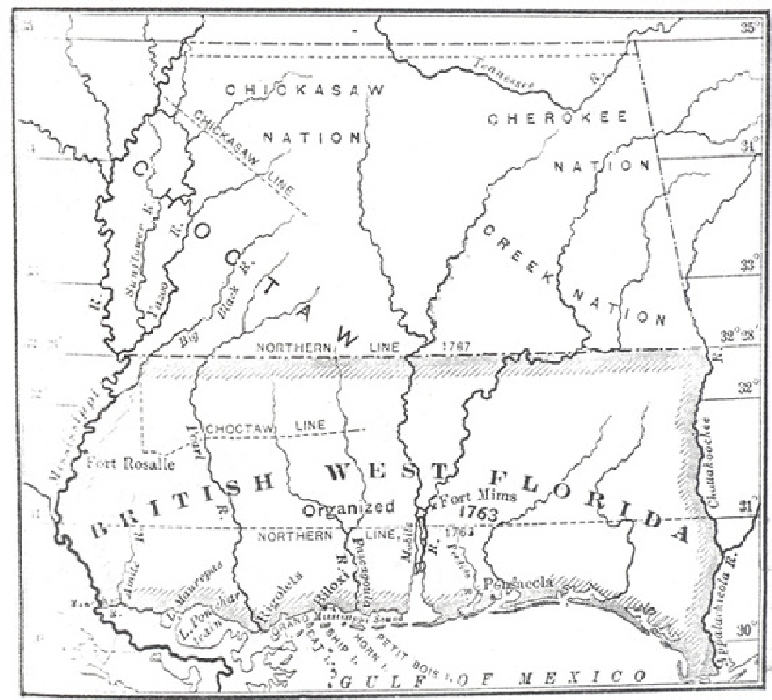
West_florida_map

18th-century map that serves as the basis for the territorial claims of the micronation of the Dominion of British West Florida. Image via the “History” page of the Dominion’s website, here.

Note: Occasionally, as happens with all teachers, I’ll read something that will lead me to think, “With a little pushing/pulling/mulling over, that just might make for a good writing assignment for my students.”  So, some of those will appear here under the “Teaching Idea” category that you’ll see over in the right-hand gutter.  I don’t pretend that these are in any way finished; rather, these are more like my thinking “out loud” in this space, with a tacit invitation to whoever might be interested to weigh in with comments.

A couple of weeks ago, I read this article on micronations in Motherboard and immediately thought it might have potential for a research project for my Comp II students (that is the “research paper” composition class we teach at Butler).  Almost immediately, other things came up that claimed my attention, and I didn’t do anything more with the idea until yesterday when an article on the Dominion of British West Florida popped up in my Facebook feed, and the next thing you know, I found myself adding some links to micronation websites over on the right-hand side of my blog as a future resource for my students.  We in our department are moving toward demanding more research from our students throughout the Comp sequence, and I think that, at least as this half-formed thing looks in my head at the moment, it would certainly fulfill that goal.  Also, I want to give those so inclined the opportunity to be creative and/or learn more about a topic or issue they think is important; the Motherboard article’s mention of Westarctica‘s serving primarily as a site to inform people of conservation issues and climate change made me see that this project could be serious as well as fun.  Finally, the idea of micronations dovetails in interesting ways with my academic interests in the idea of place and, in conjunction with the book project, with the idea I’ve been writing about regarding the New World as a heterotopic space.

So here’s a tentative list of elements that I will require my students to address in this project.